Prepping and Planning for the Great Loop
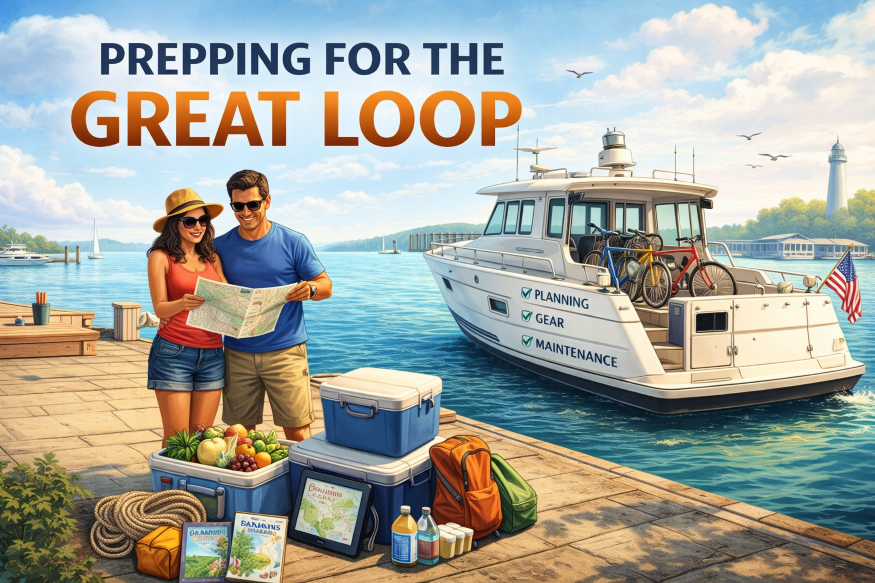 The Great Loop is one of the ultimate boating adventures in North America. A 6,000+ mile journey that circles the Eastern U.S. and parts of Canada, linking the Atlantic Ocean, Great Lakes, and inland rivers. For first-time Loopers, preparation is key. From timing your trip to winterizing your boat, ensuring your financing is in order, and mapping out stops, a well-planned Great Loop adventure can be smooth, safe, and unforgettable.
Choosing the Right Time to Start the Great Loop
Timing is one of the most critical factors for a successful Loop. Many Loopers start in spring in Florida and plan for 6–12 months to complete the journey, timing their arrival in northern areas to avoid ice or extreme heat. The Great Loop covers diverse climates and waterways, so understanding seasonal conditions is crucial.
Spring (April–May)
- Starting in the South during spring is ideal. Florida, Georgia, and the Gulf Coast waters are warm, navigable, and less crowded.
- Avoid northern ice in the Great Lakes.
- Early spring cruising allows you to reach northern regions in summer, when weather is favorable.
Summer (June–July)
- Perfect for northern sections such as the Great Lakes and New England.
- Long daylight hours give you more cruising time.
- Be mindful of hurricane season in early summer along the Southeast.
Fall (September–October)
- Ideal for completing the Loop or cruising northern waters.
- Cooler temperatures, fewer crowds in locks and marinas.
- Watch for early freezes in northern areas — plan your route carefully.
Winter (November–March)
- Not recommended for northern sections due to ice and cold temperatures.
- Some southern cruising is possible, but completing the Loop in one season isn’t feasible.
Mapping Your Route
The Great Loop isn’t a single fixed path. It’s a network of interconnected waterways. Planning your route early ensures you can access all the locks, marinas, and fuel stops safely. Use of interactive maps and apps specifically designed for Great Loop help travelers plot daily distances and stops effectively.
Key considerations when mapping your route:
- Locks & Waterway Closures: Some locks close seasonally. Check schedules to avoid delays.
- Marina Stops: Plan fuel, groceries, and overnight stays in advance, especially in popular areas, as summer months often bring crowed marinas and limited provisions.
- Side Trips: Many Loopers add side excursions, like the Erie Canal, Lake Champlain, Chicago and Hudson River attractions.
- Weather Considerations: Factor in hurricane season, spring floods, and lake storms.
Prepping Your Boat
Your boat is your home for the journey, so proper prep and supplies are critical. Even small oversights can cause big problems on a long voyage. Create a pre-departure checklist and follow it methodically. The Loop is a long journey, and proactive maintenance prevents costly delays. Consider creating an inventory list and update it monthly to track what you have on board.
Essential Boat Prep Steps:
- Engine Maintenance – Oil change, fuel filters, belts, and cooling systems.
- Electrical Systems – Check batteries, solar panels, and shore power connections.
- Safety Equipment – Life jackets, flares, fire extinguishers, and first aid kits.
- Navigation Gear – GPS, charts, VHF radio, and backup systems.
- Plumbing & Water Systems – Inspect pumps, hoses, and freshwater tanks.
- Hull & Deck – Inspect for leaks, damage, and anti-fouling paint if needed.
- Winterization/De-Winterization – If your boat was winterized, ensure all systems are flushed and operational.
Provisions and Supplies:
- Food & Water – Plan for multiple days between marinas.
- Clothing – Layered clothing for varying climates and sudden weather changes.
- Fuel & Maintenance Supplies – Extra oil, belts, and cleaning materials.
Safety and Navigation Tips
The Great Loop is generally safe, but long-distance navigation has unique challenges.
- Lock Navigation: Learn proper lock etiquette and signaling.
- Weather Monitoring: Use apps and NOAA alerts for storms and wind advisories.
- Travel With Others: Many Loopers form flotillas or join Great Loop groups for support.
- Emergency Planning: Have contacts, tow services, and marina info prepped for each region.
Financing and Insurance Considerations
Long trips like the Great Loop are an investment. Ensuring your finances and insurance are in order is a key step in your planning process.
Financing Tips:
- Evaluate whether refinancing your loan could lower payments before your trip.
- Consider whether you need upgrades and whether it makes sense to finance those upgrades rather than paying cash
- Budget for fuel, marina fees, maintenance, and unexpected repairs as the Loop can take several months.
Insurance Tips:
- Confirm your policy covers extended cruising, including Canadian waters if you plan to cross borders.
- Check for coverage of loss, theft, and damage during transit and marina stays.
- Consider supplemental insurance for medical emergencies while cruising.
Tips for a Smooth Journey
- Pace Yourself: Average travel is 30–50 miles/day — don’t rush.
- Stay Flexible: Weather and waterway conditions may require route adjustments.
- Connect with the Community: Great Loop forums and social media groups provide invaluable advice.
- Document Your Adventure: Keep logs and photos — many Loopers enjoy sharing experiences post-trip.
--------------
FAQ Section
Q: How long does it take to complete the Great Loop?
A: Most Loopers take 6–12 months, depending on stops, pace, and weather.
Q: Can the Great Loop be completed in one season?
A: It is possible, but generally not recommended for first-time Loopers due to weather and lock schedules.
Q: What’s the best starting point for the Great Loop?
A: Popular starting points include Florida’s Intracoastal Waterway, Gulf Coast marinas, or other Southern locations in spring.
Q: Do I need special insurance for the Great Loop?
A: Yes. Make sure your policy covers extended cruising, international waters, and marina stays.
Q: What kind of boat is best for the Great Loop?
A: Trimarans, trawlers, and cruisers with shallow drafts and reliable systems are preferred. Size depends on comfort and marina accessibility.
Published and revised 4/30/2026
